


Relatively Low Naturalness
For a product to be cosmos organic or natural certified, 95% naturalness is enough to be labeled.
In short, an organic-labeled product can very well contain up to 5% petrochemical derivatives.
For example, for a 250 ml shower gel, this is the equivalent of a cherry-sized amount of 'synthetic' product on your children's skin, great!
To counteract this, we have repeatedly proposed to Ecocert (an organic certification organization) to increase the minimum percentage of naturalness required to obtain the label from 95% to at least 98%. Without success...
Greenwashing
One could believe that by buying organic, they are respecting nature.
But not necessarily...
Organic-labeled products also have effective marketing departments that use greenwashing.
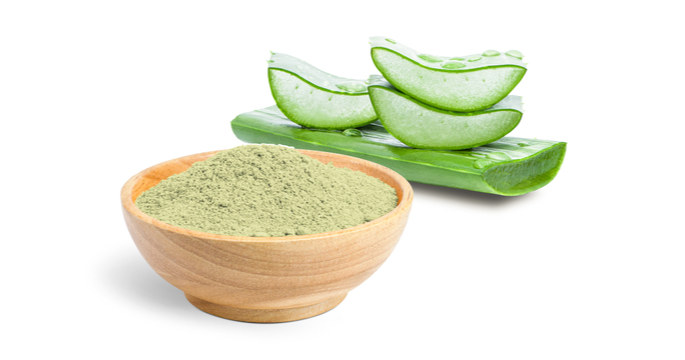
Proof of this: the famous organic Aloe vera.
Have you ever wondered why this plant, native to Southeast America, is present in almost all your organic-labeled products?
Indeed, it's everywhere. However, aloe vera in shampoo or shower gel is pure greenwashing.
This is why:
To obtain an organic label, a minimum of 10% of ingredients must come from organic farming.
Consequently, the cosmetic industry has found the perfect solution to achieve this 10%: organic aloe vera powder.
According to the organic standard (COSMOS), the powder is considered a 200-fold concentrated aloe vera juice.
So, following this logic, only 0.05% of powder is needed to achieve 10% of organic product (a little math: 0.05% X 200 = 10%).
However, the powder is perfectly soluble in water and therefore has no benefit in a rinse-off product!
These poor aloe vera plants are dehydrated and imported from South America to end up down our drains...
We have also contacted Ecocert about this; similarly, no positive response so far.
Sulfates
And yes, sulfates, this family of very nasty surfactants (read article on sulfates) is allowed in organic products.
You must have heard of the infamous nasty SLS, ALS, sodium coco sulfate?
Since they are partly derived from natural products, particularly palm and coconut oil, they are allowed in certified products.
There are over 1600 scientific articles exposing the harmful effects of this family of products on skin and hair.
This year, for the new version of COSMOS certification, Ecocert has decided to take action and proposes to remove this family of ingredients.
I (Dr. Tao) was interviewed by Ecocert as an expert and of course, I voted for their prohibition, we'll see!
Excessive Use of Plant Extracts
Nature is not always harmless.
Organic products are full of plant extracts.
Some are medicinal plants, especially certain plants from the Asteraceae family (arnica, calendula, chamomile, etc.).
Medicinal means they should not be used daily!
Yet, there are more and more scientific reports indicating cases of allergy to Asteraceae plants in young children (1).
This is also the case for meadowsweet.
Pretty little flowers in the fields, but they contain methyl salicylate as a major chemical compound. A suspected endocrine disruptor and forbidden for young children (under 3 years old).
Preservatives
Yes, 5 synthetic preservatives (in the list of European regulation 1223/2009) are allowed in labeled products...
For us, they are all more or less harmful to our children (see the article on preservatives in organic products).

So What to Do?
Don't worry, by ordering organic, you ensure you avoid the worst, but if you want products that pose no risk to your little ones, you need to know how to decode the ingredients!
Otherwise, choose Lilikiwi products, created by a doctor in cosmetology, we strive to be the brand you can trust with your eyes closed!
If you have any questions, feel free to contact us at coucou@lilikiwi.fr
Source:
(1) Paulsen et al. 2002. Contact sensitization from compositae-containing herbal remedies and cosmetics. Contact Dermatitis/volume 47, issue 4. Page 189-198.