


First of all, what is an endocrine disruptor?
The discovery of the endocrine activities of certain molecules is very recent, with the first study beginning in the 1960s. It was in 1991 that the term 'endocrine disruptor' (ED) was introduced by a zoologist, Dr. Théo Coburn. Since then, health authorities have given an official definition of EDs:
"An endocrine disruptor is a substance or mixture of substances that alters the function(s) of the endocrine system and consequently causes adverse effects in an intact organism, its progeny, or (sub)populations."
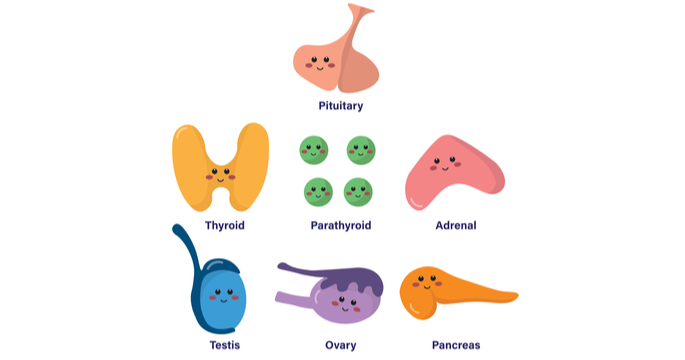
In concrete terms, these are molecules that have a negative effect on our hormonal system, which is generated by the pituitary gland, thyroid, pancreas, or sexual organs.
What are the health effects on our children?
Young children are a very vulnerable population to EDs. This is complicated not only because their biological barrier is more fragile, but also because the hormonal system plays an essential role in a child's development and general health.
This means that abnormal functioning of any endocrine gland in the body can have a dramatic impact. Most disorders related to hormonal imbalances are typically linked to abnormal growth or sexual development.
EDs could disrupt this natural endocrine harmony in our children's bodies. Some EDs have a chemical structure very similar to sex hormones and could lead to premature ovarian or testicular development, which means inducing early puberty.
And other endocrine disruptors have the opposite effects. They prevent hormones from reacting with our young children's bodies. This directly influences pubertal development.
ED regulation is evolving slowly, and industry is playing sorcerer's apprentice
The harmful effects of bisphenol A were demonstrated in scientific journals around the 1990s, but it was not until 2012 that France banned this problematic compound. The worst part is that industry is playing sorcerer's apprentice:
It's always the same story: since bisphenol A was banned, industry quickly found an alternative: bisphenols S and F, which are not yet prohibited by regulations. But scientific studies show that these have far worse harmful effects than bisphenol A. (1)
So, what can be done?
Avoid using certain plastics.
There isn't just one type of plastic; there are many different types.
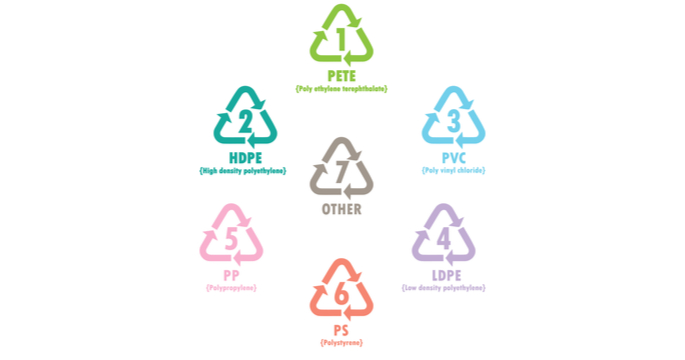
Depending on the material they are made of, plastics are classified from 1 to 7.
Numbers 2 (HDPE), 4 (LDPE), and 5 are safe, especially if they are food-grade.
Recycled plastics of HDPE and LDPE classes are much more environmentally friendly, but unfortunately, they do not guarantee the absolute absence of endocrine disruptors.
It is essential to avoid PS (number 6) (the plastic used in meat packaging), PVC (number 3), and "other assorted plastics" (number 7), which are suspected of being carcinogenic and potentially contain endocrine disruptors.
For us, it's also better to avoid PET (number 1), found in supermarket water bottles.
Scientific studies contradict each other regarding the presence or absence of endocrine disruptors in them... It's hard to know what to believe.
Prioritize certified natural or organic products.
Choosing natural and organic products ensures you avoid the worst: certain families of parabens, triclosan, phthalates in perfumes...
But be aware that the presence of some suspected endocrine disruptors is also found in organic products.
Make good use of your product scanning app.
Despite their many flaws, some product scanning applications accurately highlight the presence or absence of endocrine disruptors, such as INCI beauty.
Use products with a minimum of ingredients and a very long history of use.
Regulations on EDs evolve slowly, and health authorities often only react after devastating incidents to ban these substances.
The safest approach is to use very few care products on children's skin.
But even if each product contains very few ingredients, each ingredient can have a more or less long-term impact on our body after use.
At our company, we work hand-in-hand with the best toxicologists in France, and every day, we monitor scientific developments concerning all our ingredients.
See how we chose the ingredients at LiLiKiWi.
Don't fall for superfluous marketing ingredients.
Plants make us dream, nature inspires us, but nature is not always harmless for our little ones.
Plant extracts have much more complex compositions than one might think (a mixture of hundreds or thousands of molecules), and often, we don't even know the full composition.
And especially, certain plant extracts authorized in organic cosmetics contain suspected EDs. Here is the list:
- Meadowsweet extract (INCI: SPIRAEA ULMARIA FLOWER EXTRACT) contains methyl salicylate, which health authorities have suspected of being an ED since this year.
This is the limit of product scanning applications: they alert about methyl salicylate but not about meadowsweet extract.
- Ylang-ylang essential oil (INCI: CANANGA ODORATA FLOWER OIL) contains benzyl salicylate, also suspected of being an ED.
- Fermented radish extract (INCI: LEUCONOSTOC/RADISH ROOT FERMENT FILTRATE). It was considered a miracle natural preservative in organic cosmetics, but in reality, the extract contains didecyldimethylammonium salt, which is carcinogenic, and salicylic acid, which is suspected of being an ED—great! (2)
Extreme caution is needed with rinse-off products.
Creams and lotions, because they have prolonged contact with the body. EDs need time to penetrate the skin and react with our bodies, and very often, EDs are small molecules that do not dissolve in water. In concrete terms, buying a cream that contains endocrine disruptors is much more serious than using a shampoo that contains them.
If you have any questions, feel free to send a message on our website or contact us by email at: coucou@lilikiwi.fr. We will be happy to respond quickly!
Sources:(1) Eladak et al. A new chapter in the bisphenol story: bisphenol S and bisphenol F are not safe alternatives to this compound. Fertility and sterility. Volume 103, issue 1. Jan. 2015 page 11-21(2) Li et al. Identification of Didecyldimethylammonium Salts and Salicylic Acid as Antimicrobial Compounds in Commercial Fermented Radish Kimchi. J. Agric. Food. Chem. 2015, 63, 11, 3053-3058.