


What is a fragrance?
Let's start at the beginning: a fragrance is a smell (admittedly, anyone could have said that).
More specifically, a fragrance is an artificial mixture of different components that produces a smell.
What is a fragrance for?
In nature, plants use smells, or "fragrances," to defend themselves against insects, or conversely, to attract them (pollinators).
In mammals, smells are often very rich in chemical information, and animals use them to learn all sorts of information about their counterparts and their intentions.
In short, it's a bit like an Instagram feed or an animal's business card.

How to use scents?
We are not the only mammals to use scents voluntarily.
For example, our dog friends sometimes roll in very strong-smelling things (cut grass or other) to mask their scent.
Ultimately, perhaps our furry friends wanted to invent deodorant?
However, we humans like to smell GOOD; olfactory sensations play a huge role in our lives.
Those who have already lost their sense of smell (especially due to Covid...) will know very well what we are talking about!
The history of scents
From childhood, learning and developing olfactory sensation are true pillars of our lives.
Initially, there is the smell of the mother, which reassures and soothes the baby (who hasn't slept with comforters before school started? Or given their pajama T-shirt for a nap at daycare).
Indeed, children discover and build part of their world around smells.
From birth, humans' olfactory memory is built.
Fragrances in cosmetics
Let's get back to business, or rather, to our bottles!
In cosmetics, the basic formulations or active ingredients of cosmetics don't always smell very good, due to the active ingredients, cleansing bases, etc.
For example, the glutamates in LiLiKiWi shampoo smell like a mixture of egg white and goat... Not great for washing your hair.
However, the sensoriality of a cosmetic product (smell, texture) is an essential part of the user experience of a care product.
Admit it, washing with a shower gel that smells like garlic or camembert is much less pleasant... Especially since we have no information on the cosmetic virtues of these dishes.
Cosmetologists are therefore obliged to add "fragrance" to mask bad odors and offer you this "pleasure" experience when using your products.
Can we trust fragrances in cosmetics?

Of course, you've heard many things about fragrances, and not always good echoes.
The bad reputation of fragrances naturally makes us wary; we will help you understand that there can be "good" fragrances.
Fragrances to avoid.
Fragrances in unlabelled products
Fragrances that do not fall under organic labels such as COSMOS (Natrue in Germany, USDA in the USA) are clearly to be avoided.
The COSMOS label
Despite numerous flaws in this organic label, the COSMOS standard (organic label) is strict about the composition of fragrances.
In summary: all components of care fragrances must be 100% natural in origin, without any solvents or petrochemical compounds.
In this case, by buying organic products, you automatically eliminate the most harmful products for children, namely: BHT, toluene, and phthalates (endocrine disruptors and CMRs: Carcinogenic, Mutagenic, and Reprotoxic!).
Do unlabelled fragrances have secrets?
The answer is a big YES.
Indeed, the composition of fragrances, as we mentioned, is subject to the industrial and professional secrecy of fragrance suppliers.
So even cosmetic brands do not have access to their complete composition, making it difficult for brands to be transparent about the formulation of their perfumed products...
In any case, for uncertified fragrances, you have no guarantee.
Small example:
Perhaps you have noticed that a very iconic fragrance from a very big brand had to change its formulation recently...
You know, the perfume embodied by a very beautiful actress who wears a very pretty golden dress, a perfume you might adore?
In any case, this brand, which rhymes with outdoors, had to change the composition of its perfume because "Lilial" is now a proven endocrine disruptor and has been banned in cosmetics since March 2022 in Europe... (a substance that smells like lily of the valley).
Now, this substance will disappear from their products, but for how many years have people who love this perfume been using this substance on their skin?
Essential oils for fragrancing

Essential oils for children?
Essential oils are very powerful and active substances, which is why aromatherapy is effective.
But like all therapies and medicines, they are not intended for daily and repetitive use.
Indeed, daily contact with essential oils could have neurotoxic, hepatotoxic, and nephrotoxic effects... Some of these oils can even be fatal for fetuses or infants, hence the advice to avoid their use in pregnant and breastfeeding women or babies.
How to recognize a fragrance containing essential oils?
Often, essential oils have very typical vegetal notes; the final fragrance is very "floral," "green," or "aromatic" (the smell reminds you of grass, plants...).
Also, you will always find allergens in essential oils.
When you buy an organic care product, look closely at the end of the ingredient list; if you find "linalool," "limonene," or another product from the list of 26 allergens, it probably contains essential oils.
Also, product scanning applications detect allergens very well; scanning applications will clearly indicate the presence of allergens, so don't hesitate to scan your formulas.
Allergens, how to avoid them?
For an organic product, it is rare to voluntarily add allergens; they often come from essential oils or aromatic extracts.
To avoid them: remember to scan your products!
Why avoid overly "complicated" fragrances?
Did you know that some perfumes can be composed of a hundred different aromatic substances?
Indeed, perfumers like to build olfactory pyramids.
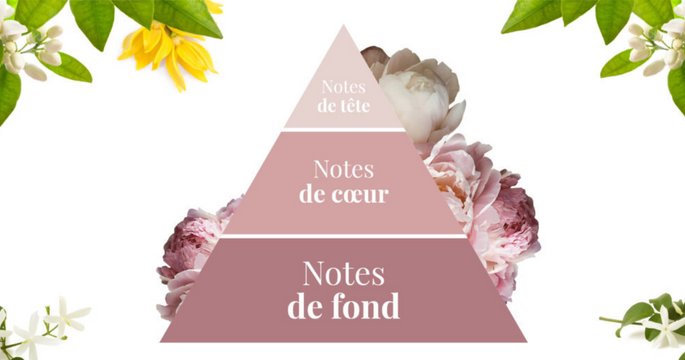 However, in skincare products that stay on the skin for a long time, this is not necessarily a good thing.
For example, for children, the same rule applies to product and fragrance formulations: the simpler, the better!
And at LiLiKiWi, how did we choose our fragrance?
First, we start by choosing a fragrance that can be eaten.

The different categories of fragrance
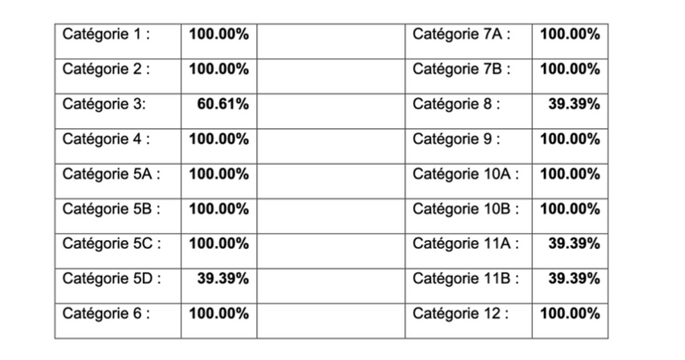
Each fragrance has its regulatory identification document called 'IFRA' with the maximum recommended dose as shown in the table below:
The categories correspond to different uses.
For example: category 5D corresponds to baby products; this fragrance can be used up to 39% without risk in a product intended for babies.
Or, category 6 corresponds to products that can come into contact with the mouth, meaning this fragrance can be used up to 100%.
How does LiLiKiWi use fragrances?
Then, we use this fragrance at a dosage of 0.3% in our cleansing foam.
In plain terms: you would need to use 133 bottles of product at once to risk having problems.
In very plain terms: you would need to use 133 bottles of 250 ml cleansing foam, so 33 kg of product in your bathtub—we are SAFE.
Why fruit fragrances at LiLiKiWi?
Furthermore, we only choose fruity esters, do you know why?
This is not a marketing choice, even though everyone loves our scents, but rather a safety choice.
Indeed, fruity notes come from very simple molecules, obtained by esterification between an alcohol and an acid. (Huh?)
Let us explain:
The esterification procedure is simple; it's a bit like when you cook beef bourguignon: you add alcohol to the recipe so that it attaches to the amino acids of the beef and takes on the taste of the meat (careful, are you drooling a little?).
Wines, for example, also use natural esterification to obtain their fruity flavors (to be consumed in moderation, but a small glass with beef bourguignon goes quite well).
Where do LiLiKiWi's fruity fragrances come from?

The fragrances (or smells, we should say) of our products do not come from apple or strawberry extracts, despite the esters naturally present in these fruits.
Simply because there is very little of them in fruits, and they are not powerful enough to mask the smell of the formulation's base.
A little chemistry to understand:
You might prefer cooking, but you'll see, chemistry is fun too!
The green apple scent:
Our perfumer blends the fruity esters of pear and apple (What, pear? Were we lied to?).
The alcohol and fatty acids come from the fermentation of cane sugar. (And now you're hungry and craving a small mojito).
The sweet strawberry scent
Our perfumer blends the fruity esters of strawberry and banana (and yes, there's banana in it) but also caramel and a hint of vanilla extract.
(We know people who will be baking cakes tonight too).
Know that these small esters are small enough to be volatile, meaning they give a pleasant fragrance to the product.
But they are large enough not to penetrate the skin barrier, meaning that the smell does not stay on the skin and hair for long.
The real advantage of fruit fragrances:
No scientific article has demonstrated the allergenic potential of these families of fruity esters.
This is why for all LiLiKiWi products, you will only find good fruit smells.
Already, it's better for our children's health, and besides, we like our smells, don't you?
If this article has helped you better understand the complex world of cosmetic fragrances, we are delighted.
If this article has given you menu ideas for this weekend, that's even better; in any case, remember: eat, move, and consume 5 fruits and vegetables a day!
And if you have a reaction or a question: coucou@lilikiwi.fr