


Most hygiene products, for both adults and children, contain sulfates. Ingredients from the "sulfate" family are widely used in thousands of different products, with a concentration ranging from 0.01% to 50%. Their foaming power and low cost are particularly attractive to manufacturers. However, this is a family of molecules that should be absolutely avoided for the well-being of your children's skin.
How to identify sulfated ingredients?
Ingredients from the "sulfate" family are relatively easy to spot; they all end with the word "sulfate." In hygiene products, four of them are widely used:
- Sodium Lauryl Sulfate (SLS)
- Ammonium Lauryl Sulfate (ALS)
- Sodium Laureth Sulfate (SLES)
.jpg)
What are the harms to children's skin?
Highly irritating
The most well-known are Sodium Lauryl Sulfate (SLS) and its twin Ammonium Lauryl Sulfate (ALS), both derived from laboratories. They are considered irritating agents. Just 2% of SLS alone is enough to irritate a child's skin. For several years, over 16,000 scientific studies have already demonstrated their harmful effects (1-5). All molecules in the sulfate family have the particularity of destroying the protein structure of the skin. This is akin to pouring acid on the skin, but in a gentler and slower manner. Fortunately, our skin is capable of quickly producing new proteins. This is why you don't see your skin "burning" under the effect of sulfates. However, their long-term harmful effect on the skin has been proven. A German study (6) was conducted on this subject, applying an aqueous solution consisting of 7.5% SLS to the skin of participants for 20 minutes a day for 8 days. By the end of the study, their skin had literally "chemically burned."
Polluting
Sodium Laureth Sulfate (SLES) is obtained through an ultra-polluting and toxic chemical procedure. Unfortunately, you will find a lot of SLES in products labeled "gentle," "0%," "for children," "for sensitive skin" in supermarkets.
Can sulfates be avoided by buying "organic"?
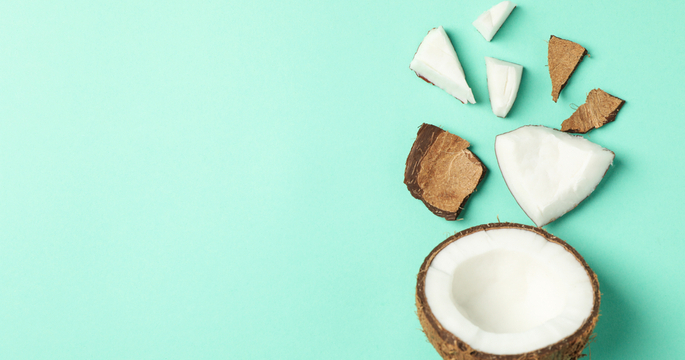
Unfortunately, NO! SLS, ALS, and SCS are all allowed in certified organic products. Therefore, "organic" products are not a guarantee for the skin safety of children. The only sulfate not present in "organic" products is SLES, due to its ultra-polluting synthesis process, as mentioned above. Sodium coco sulfate (SCS) is a solid cleaning agent. It quickly became an essential ingredient in natural solid cosmetics (solid soaps or shampoos), as coconut evokes a healthy and gentle material. But where exactly does SCS come from?
It is synthesized from coconut oil, which is a natural mixture of lauric acid (50%) and myristic acid (20%). In reality, SCS is a mixture of Sodium Lauryl Sulfate (50%) and Sodium Myristyl Sulfate (20%). While SCS is a naturally derived ingredient, it is still too aggressive to be used in children's products. But why does the "organic" cosmetics industry allow SCS in its formulas?
It's certainly a matter of price, as this type of sulfate costs about 8 times less than families of natural and gentle cleansers. However, it also benefits manufacturers by encouraging parents to buy even more products to counteract their devastating effects on the skin.
Did you think buying "organic" could protect you from SLS, which is very irritating to the skin and hair? Surprise! The next time you see the word "sulfate" on the label of a children's skincare product, run away!
If you have any questions, please feel free to send a message on our website or contact us by email at coucou@lilikiwi.fr. We will be happy to respond quickly!
Sources:
1. Human & Environmental Risk Assessment on ingredients of European household cleaning products (HERA), Alcohol Sulphates, Human Health Risk Assessment, 2002.
2. Cosmetic Ingredient Review (CIR), Annual Review of Cosmetic Ingredient Safety Assessments-2002/2003, 2005. 24 Suppl 1 : 1-102.
3. Madsen, T. et al., Environmental and Health Assessment of Substances in Household Detergents and Cosmetic Detergent Products. Environmental Project No. 615, Danish Environmental Protection Agency, 2001.
4. Cosmetic Ingredient Review (CIR), Final Report on the Safety Assessment of Sodium Lauryl Sulfate and Ammonium Lauryl Sulfate, December 1, 1983 1983. 2 (7): 127-181.
5. Bondi, C.A. et al., Human and Environmental Toxicity of Sodium Lauryl Sulfate (SLS): Evidence for Safe Use in Household Cleaning Products. Environ Health Insights, 2015. 9 : 27-32.
6. Wilhelm, K.P. et al., Surfactant-induced skin irritation and skin repair: evaluation of a cumulative human irritation model by noninvasive techniques. Journal of the American Academy of Dermatology, 1994. 31 (6): 981-7.