


Before we begin
First and foremost, whenever we discuss ingredients, we should clarify a few things:
All ingredients approved by the EU (Regulation 1223/2009) are considered "safe" (with the exception of neurotoxicity and ecotoxicity) within the specified usage limits.
The "risks" of ingredients are potential "risks." For example, an ingredient with CMR (carcinogenic, mutagenic, reprotoxic) activity will not necessarily cause cancer in the consumer.
Our goal is to identify the various risks for children in order to inform you.
What is Stevia?
Stevia is a natural sweetener extracted from the leaves of the Stevia rebaudiana plant, primarily composed of Rebaudioside A, a terpenoid also known as "Steviol Glycoside." It is widely used as a sugar substitute in many food and beverage products due to its intense sweetening power without calories. Stevia has been approved by the European Union as a sweetener since 2011.
This naturally derived sweetener is suitable for people with diabetes, those seeking weight loss and is non-cariogenic. Even Coca-Cola uses it in its "Life" Coca-Cola for its natural and dietary image.
Why we exclude it from our toothpaste
Activity on the reproductive system
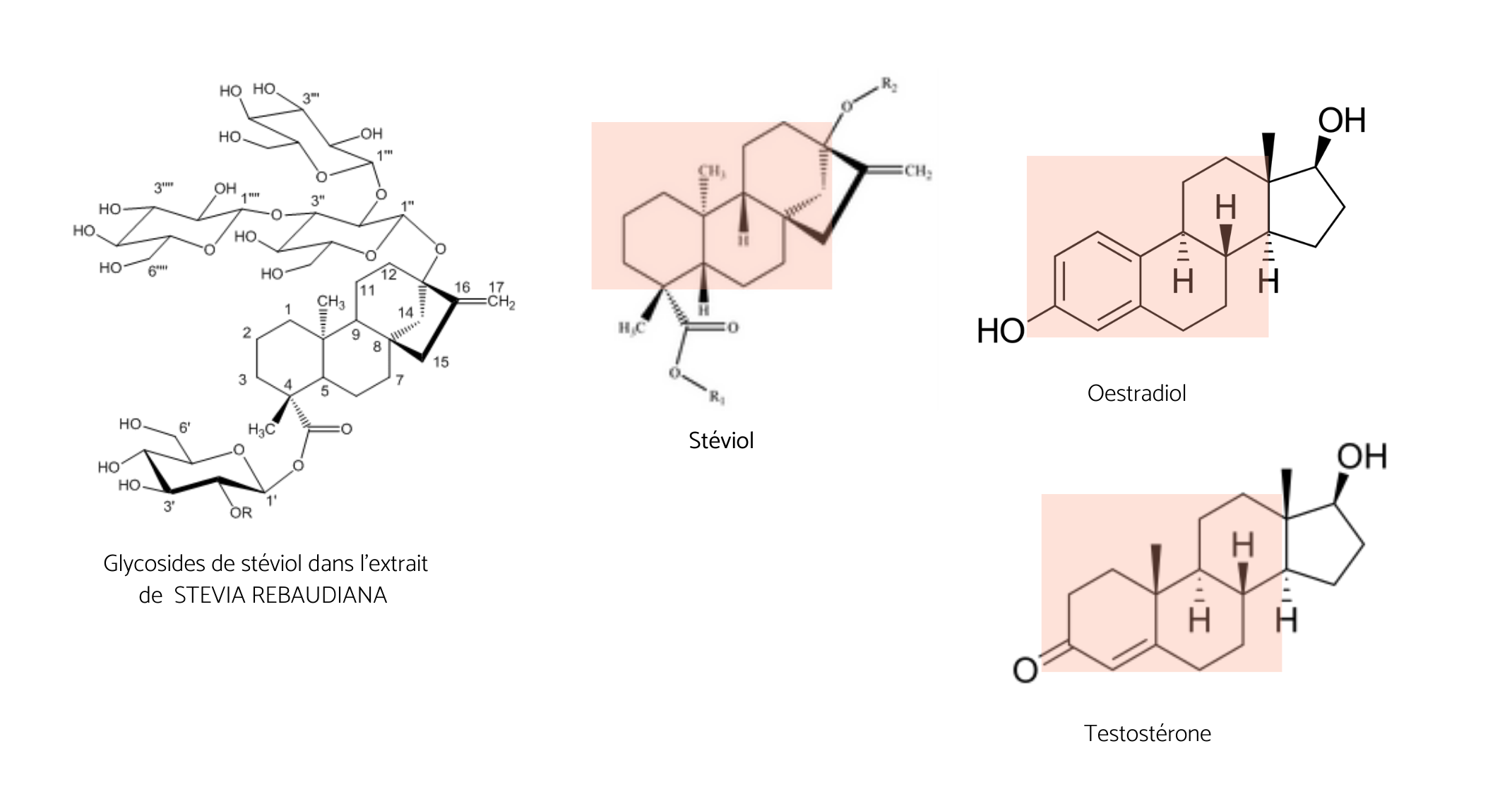
The Stevia rebaudiana plant is known in traditional South American medicine as an abortifacient. The structure of steviol concerns us, as it is very similar to that of sex hormones. It is possible that our body's hormone receptors could react to this substance, which would imply an effect on children's reproductive systems. Indeed, their bodies are much more sensitive to hormones than an adult's.
We found three studies on the activity of stevia on the reproductive system:
First article:
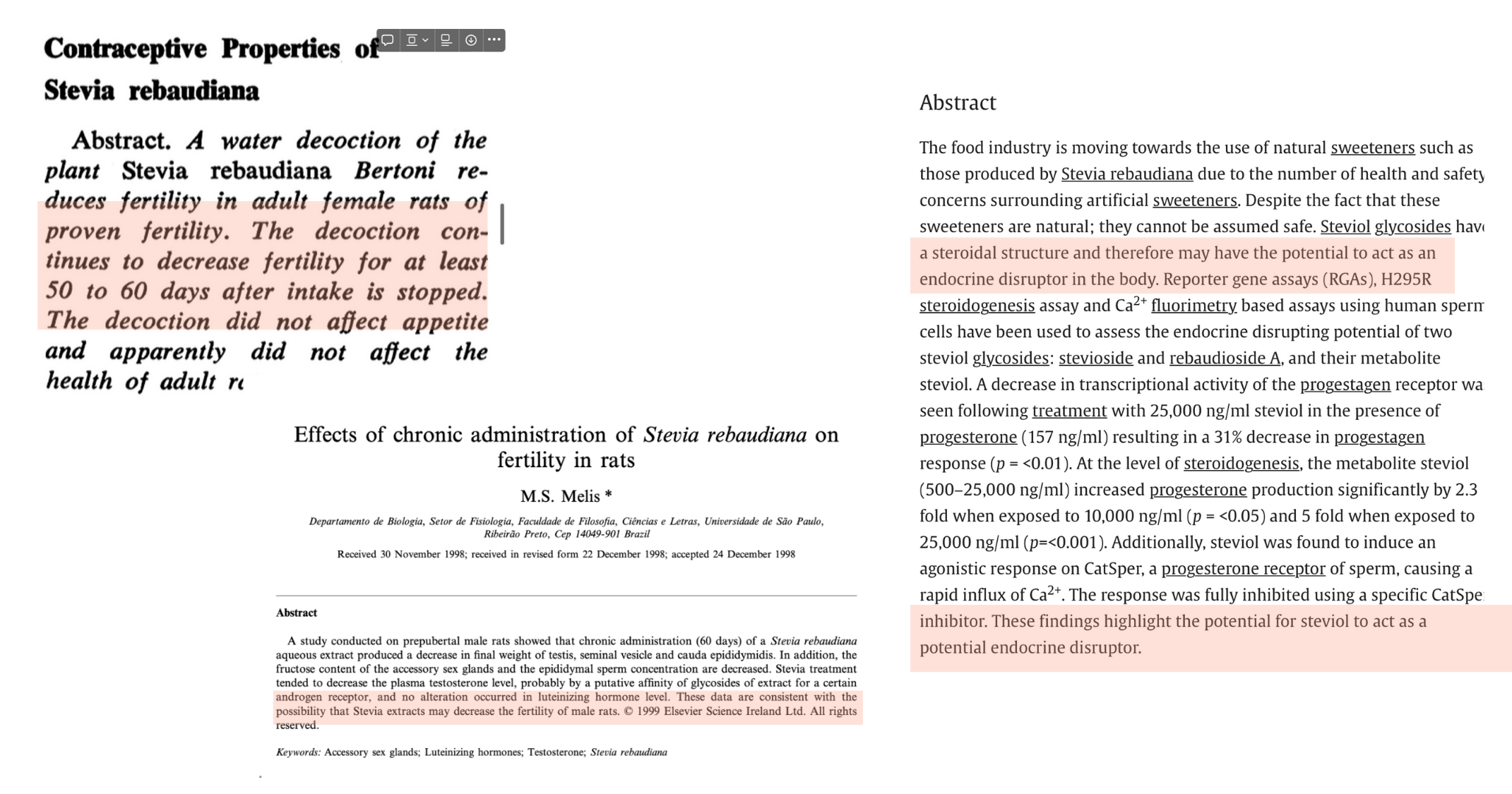
- Study from 1968 by Mazzei-Planas G and Kuc J. "Contraceptive properties of Stevia rebaudiana". Science. 1968;162(3857):1007.
- Result: Stevia decoction has a contraceptive effect in female mice. This effect persists for 50 to 60 days after administration of a concentrated extract.
Second article:
- Study from 1999 by Melis MS. "Effects of chronic administration of Stevia rebaudiana on fertility in rats". J Ethnopharmacology.
- Result: For 60 days, male rats received a dose of stevia decoction. At the end of this period, a decrease in testosterone levels, sperm concentration, and the definition of sex glands was observed.
Third article:
- Study from 2016 by Maeve Shannon et al. "In vitro bioassay investigations of the endocrine disrupting potential of steviol glycosides and their metabolite steviol, components of the natural sweetener Stevia". Molecular and Cellular Endocrinology, Volume 427, 15 May 2016, Pages 65-72.
- This latest study, conducted in vitro, shows a potential effect on endocrine receptors.
The adverse effect was "denied" by the WHO, but given that the stevia market represents a $0.84 billion business, and young children ingest almost all of the toothpaste, we have chosen to avoid it completely. Although the dose of stevia is relatively low, safety is controlled, but the long-term impact remains uncertain. Therefore, we prefer not to include it in our products.
Excessive sweetening power
Stevia's sweetening power is approximately 300 times greater than that of sugar. In comparison, polyols like sorbitol and xylitol have a sweetening power between 0.5 and 1, while aspartame has a sweetening power of 200. A toothpaste containing 0.1% stevia would therefore be sweeter than any toothpaste using only polyols.
Unlike polyols, which play an essential role in freshness, preservation and antibacterial activity, stevia merely masks bad tastes.
If you have any questions, please do not hesitate to send us an email at coucou@lilikiwi.fr.