


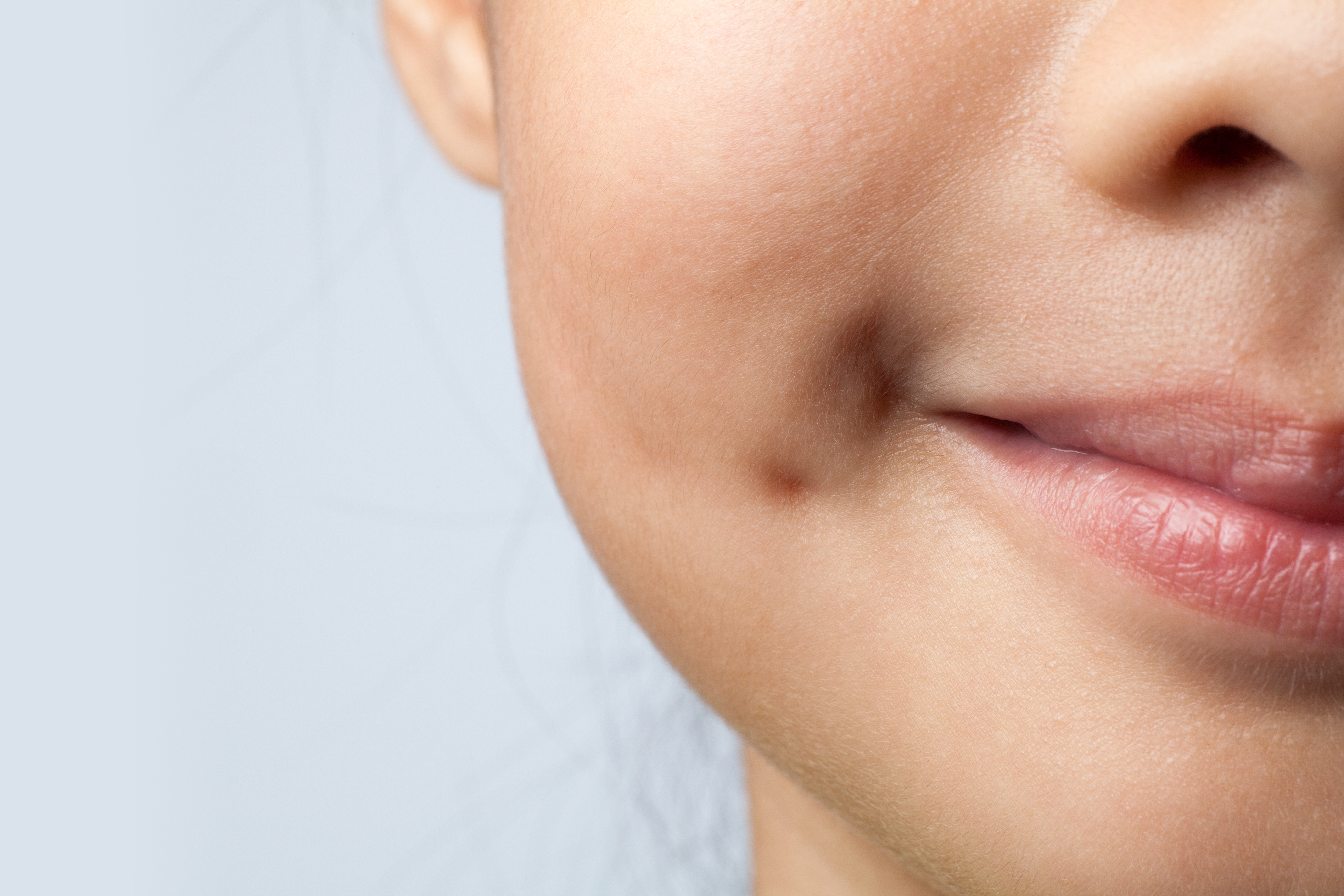
We all know that babies' skin is delicate and that they need special care designed just for them. But did you know that children's skin also has its own unique characteristics? Compared to babies, children spend a lot of time outdoors: their skin is directly exposed to external aggressions (UV, pollution, toxic and controversial substances, etc.). They therefore need specific care adapted to their skin, which is more immature and fragile than an adult's.
Children's skin, just like adults', is protected by the skin barrier. To give a simple image, this barrier is like the wall of a house: it protects against external aggressions and shelters its inhabitants. It is when the skin barrier is disturbed that children's skin develops problems.
On the skin's surface: the stratum corneum
The stratum corneum (SC) is located on the surface of our epidermis; it is the outermost layer of our skin. It is essentially composed of dead cells. The corneal layers are like the bricks of a wall: the thicker the layer, the stronger and more solid the barrier.
From birth, children's skin already possesses all the physiological functions of the stratum corneum (hydration, protection against external aggressions and toxic substances) for survival, but the thickness of the stratum corneum is very thin compared to that of an adult.
Until the age of 13, the thickness of the stratum corneum is 25% thinner and contains fewer layers compared to adult skin (1). Thus, the number of these layers differs depending on the parts of a child's body.
The most fragile skin is located on the genital areas and consists of an average of 6 layers, while the skin of the face and cheeks consists of approximately 9 layers. The most waterproof skin of all is that of the heels, made up of an average of 86 layers. The palm of the hand is composed of 50 layers, while the back of the hand has about 25 (2).
The intimate and facial areas are therefore the most fragile parts of the body, which is why, during a child's bath, only ultra-gentle washing products should be chosen.
The skin's little coat: the hydrolipidic film
The stratum corneum is covered by a complex film formed of substances from skin secretions (sweat, sebum, etc.). This film has a mechanical barrier effect that prevents the penetration of foreign substances and, more importantly, it regulates skin hydration and maintains hygroscopic substances in the corneal cells.
In babies, the hydrolipidic film changes with age. Sebaceous glands produce sebum and are sometimes even overactive, which is why babies can experience acne or cradle cap. As we grow, the sebaceous glands become inactive, which is why young children have relatively dry skin. They start functioning again at prepubertal age, particularly under the action of steroid hormones.
A cleansing product containing aggressive surfactants (SAs) can easily remove the lipids from the hydrolipidic film, drying out the skin and making children's skin ultra-vulnerable.
The skin's super shield: the skin microbiome (flora)
Did you know that half of the cells in our body come from microbes? It turns out that all the microorganisms in our body help us absorb nutrients, boost our immune system, affect our mood, and of course, protect our skin! As Stewart Brand says, "If you don't like bacteria, you're on the wrong planet."
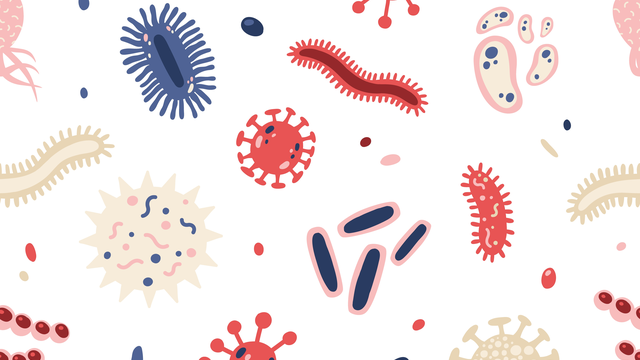
The microbes that protect our skin form the skin microbiome. It is composed of numerous living microorganisms: bacteria, fungi, viruses, and parasites. It is present from birth, evolves progressively, and varies from one individual to another. Children's skin microbiomes contain a much greater variety of bacteria than adults' (3).
The skin microbiome isn't just responsible for our body odor; it also has real superpowers!
- Defend and protect our skin.
- Regulate our immune system.
The balance of the microbiome is therefore extremely important for the skin health of our little ones. In case of imbalance, dermatological diseases such as psoriasis or atopic dermatitis can appear.
To keep your children's skin microbiome healthy, we advise avoiding washing children with alkaline products: their pH unbalances the microbiome, and it takes hours for it to return to normal.
If you have any questions about children's skin care, please feel free to leave a message on our website or contact us by email at coucou@lilikiwi.fr. We will be happy to answer you quickly!
Sources:
(1) Stefania et al. Thickness and echogenicity of the skin in children as Assessed by 20 -MHZ ultrasound. Dermatology 2000 ; 201 ; 218-222.
(2) Zhen Ya-Xian et al. Number of cell layers of the stratum corneum in normal skin – relationship to the anatomical location on the body, age, sex and physical parameters. Arch Dermatol Res 1999 ; 291 : 555–559.
(3) Andrea M. Schneider BS et al. Skin microbiota : Friend or foe in pediatric skin health and skin disease. Pediatric Dermatology. 2019 ; 00 : 1-8.