


The skin microbiota and microbiome
Micro what? Don't panic, we'll explain:
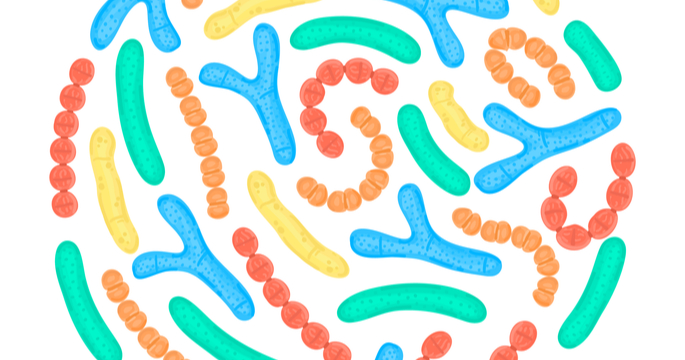
To start, the skin microbiota: these are all the microbes that live on the surface of our skin and protect us.
For example, this microbiota contains: bacteria, fungi, viruses, and even microscopic parasites.
Indeed, it's a bit scary to know that so many living things are on our skin, but these are the "good (all) little soldiers" who watch over our skin!
And the other micro-thingy?
The microbiome, they sound similar, it's true, but we'll explain.
So this other word: 'microbiome' simply refers to all the microbiotas and the environments in which they live.
The history of our skin microbiota
The birth of the microbiota
It all begins in the mother's womb; for 9 months the fetus develops under the protection of amniotic fluid.
Thus, he (or she, if you had the 5-month ultrasound) is in a sterile environment, so the skin's pH is neutral.
During the baby's passage at birth, it will acquire the microbiota from the mother's vaginal flora (we will spare you more details about the baby's "passage").
And that's how the skin microbiota of our little ones begins to develop.
For children born by C-section, hospitals can, for example, apply a compress in the mother's vagina and wrap the infant with it to provide this microbial basis.
Unfortunately, sometimes, C-section births can explain a weakened immune system in newborns.
The development of the microbiota
Next, the child's skin pH evolves as their skin microbiota develops, reaching 5.5 around 12 months.
You probably know that breast milk has many virtues, including strengthening babies' microbiome.
Indeed, mother's milk is naturally rich in prebiotics, which helps nourish the baby's bacterial flora and immune system.
This is why many infant formula brands have added prebiotics to their formulas.
Each their own microbiota
And the sheep will be well guarded!
Jokes aside, everyone's microbiota is absolutely unique.
It's a bit like our genetic code, or even more precise!
Believe it or not, the microbiota is linked to our lifestyle.
For example, if two identical twins have radically different lifestyles: they will still have the same genetic code, but different microbiotas.
The evolution of the microbiota
This microbiota evolves throughout life.
Let's take body odor as an example: parents, you have all lovingly kissed your babies' feet. Would you still do it with your teenagers?
Similarly, in the morning, rooms smell sweetly of "sleepy love" when they are small. We must admit that after 13/14 years old, we're talking more about a wild animal or a fennec than delicate little kittens...
The odors observed are the result of the work and development of our microbiota.
How does the microbiota evolve?
As we said, newborns have a simple microbiota; from 6 months, their small bodies begin to develop a variability of microbiota.
It is between the ages of 2 and 12 that the microbiota varies and evolves the most; this is a very important phase in development.
Finally, the adult microbiota stabilizes.

Okay, but what is the skin microbiota for?
Yes, we told you it's thanks to it that you discreetly put potpourri in the teenager's room, but the microbiota also has real superpowers!
Defending and protecting our skin.
When our skin is colonized by the right microbiota, billions of good microbes form a shield.
As a result, nasty microbes, responsible for diseases and infections, don't have room to settle in...
Regulating our immune system
Ultimately, all these tiny organisms act like billions of small 'vaccines' by stimulating the immune system.
They allow our body to react to their presence by producing numerous antibodies!
In short, if your little one loves to roll in the dirt, dig in the mud with their bare hands, it's not so dramatic: it can even be beneficial!
However: plan a good bath afterwards, just to keep the number of microbes at a reasonable level ;)
We hope this article has enlightened you about the microbiota; if you have a comment, an opinion, a question: we are listening at coucou@lilikiwi.fr